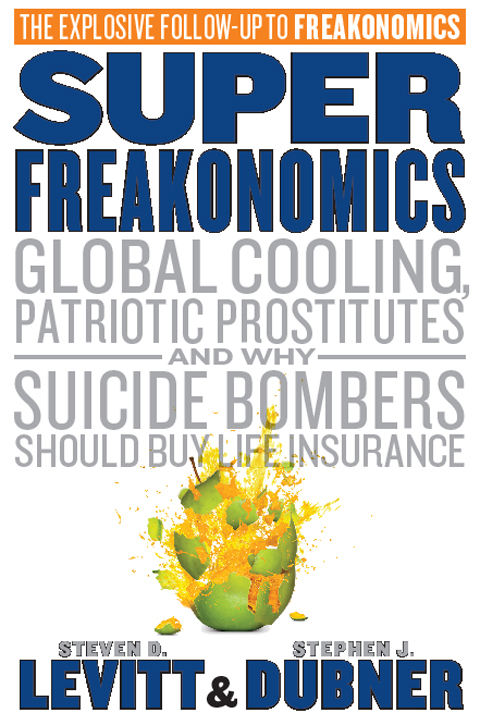
Four years in the making, SuperFreakonomics asks not only the tough questions, but the unexpected ones: What's more dangerous, driving drunk or walking drunk? Why is chemotherapy prescribed so often if it's so ineffective? Can a sex change boost your salary? SuperFreakonomics challenges the way we think all over again, exploring the hidden side of everything with such questions as:
How is a street prostitute like a department-store Santa?
Why are doctors so bad at washing their hands?
How much good do car seats do?
What's the best way to catch a terrorist?
Did TV cause a rise in crime?
What do hurricanes, heart attacks, and highway deaths have in common?
Are people hard-wired for altruism or selfishness?
Can eating kangaroo save the planet?
Which adds more value: a pimp or a Realtor?
Levitt and Dubner mix smart thinking and great storytelling like no one else, whether investigating a solution to global warming or explaining why the price of oral sex has fallen so drastically. By examining how people respond to incentives, they show the world for what it really is – good, bad, ugly, and, in the final analysis, super freaky.
Before he gained wide fame as a novelist, Ernest Hemingway established his literary reputation with his short stories. This collection, The Short Stories, originally published in 1938, is definitive. Among these forty-nine short stories are Hemingway's earliest efforts, written when he was a young foreign correspondent in Paris, and such masterpieces as "Hills Like White Elephants," "The Killers," "The Short, Happy Life of Francis Macomber," and "The Snows of Kilimanjaro." Set in the varied landscapes of Spain, Africa, and the American Midwest, this collection traces the development and maturation of Hemingway's distinct and revolutionary storytelling style -- from the plain, bald language of his first story, "Up in Michigan," to the seamless prose and spare, eloquent pathos of "A Clean, Well-Lighted Place" to the expansive solitude of the Big Two-Hearted River stories. These stories showcase the singular talent of a master, the most important American writer of the twentieth century.
by steven pressfield from the website: What keeps so many of us from doing what we long to do? Why is there a naysayer within? How can we avoid the roadblocks of any creative endeavor—be it starting up a dream business venture, writing a novel, or painting a masterpiece?
Bestselling novelist Steven Pressfield identifies the enemy that every one of us must face, outlines a battle plan to conquer this internal foe, then pinpoints just how to achieve the greatest success.
The War of Art emphasizes the resolve needed to recognize and overcome the obstacles of ambition and then effectively shows how to reach the highest level of creative discipline. Think of it as tough love . . . for yourself.
From the Publisher: The human imagination is the key battleground in the conflict between the kingdom of God and the consumer culture. Drawing from the vivid imaginations of Impressionist painters, particularly Vincent van Gogh, each chapter of The Divine Commodity uses personal narrative, biblical exposition, and cultural observation to show how consumerism has shaped our faith, and then challenges the reader to use their sanctified imagination to envision an alternative way of expressing the Christian life in our culture. The challenge facing Christianity today is not a lack of motivation or resources, but a failure of imagination. A growing number of people are disturbed by the values exhibited by the contemporary church. Worship has become entertainment, the church has become a shopping mall, and God has become a consumable product. Many sense that something is wrong, but they cannot imagine an alternative way. The Divine Commodity finally articulates what so many have been feeling and offers hope for the future of a post-consumer Christianity. Through Scripture, history, engaging narrative, and the inspiring art of Vincent van Gogh, The Divine Commodity explores spiritual practices that liberate our imaginations to live as Christ's people in a consumer culture opposed to the values of his kingdom. Each chapter shows how our formation as consumers has distorted an element of our faith. For example, the way churches have become corporations and how branding makes us more focused on image than reality. It then energizes an alternative vision for those seeking a more meaningful faith. Before we can hope to live differently, we must have our minds released from consumerism's grip and captivated once again by Christ.
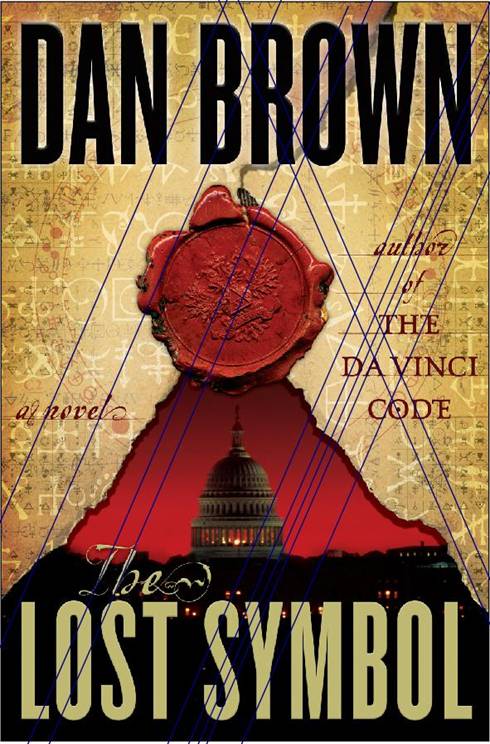
Dan Brown has always been a fall-back for me when I need some to do some mindless and carefree reading (usually after finishing a semester at grad school). The Lost Symbol is his newest offering and it doesn’t disappoint (so far). This one seems a bit more “preachy” than the others (especially towards the end) so this is definitely not an endorsement of the under-pinning theology.
From the publisher: After scores of Da Vinci Code knockoffs, spinoffs, copies and caricatures, Brown has had the stroke of brilliance to set his breakneck new thriller not in some far-off exotic locale, but right here in our own backyard. Everyone off the bus, and welcome to a Washington, D.C., they never told you about on your school trip when you were a kid, a place steeped in Masonic history that, once revealed, points to a dark, ancient conspiracy that threatens not only America but the world itself. Returning hero Robert Langdon comes to Washington to give a lecture at the behest of his old mentor, Peter Solomon. When he arrives at the U.S. Capitol for his lecture, he finds, instead of an audience, Peter's severed hand mounted on a wooden base, fingers pointing skyward to the Rotunda ceiling fresco of George Washington dressed in white robes, ascending to heaven. Langdon teases out a plethora of clues from the tattooed hand that point toward a secret portal through which an intrepid seeker will find the wisdom known as the Ancient Mysteries, or the lost wisdom of the ages. A villain known as Mal'akh, a steroid-swollen, fantastically tattooed, muscle-bodied madman, wants to locate the wisdom so he can rule the world. Mal'akh has captured Peter and promises to kill him if Langdon doesn't agree to help find the portal. Joining Langdon in his search is Peter's younger sister, Kathleen, who has been conducting experiments in a secret museum. This is just the kickoff for a deadly chase that careens back and forth, across, above and below the nation's capital, darting from revelation to revelation, pausing only to explain some piece of wondrous, historical esoterica. Jealous thriller writers will despair, doubters and nay-sayers will be proved wrong, and readers will rejoice: Dan Brown has done it again.
Wired editor Anderson declares the death of "common culture"—and insists that it's for the best. Why don't we all watch the same TV shows, like we used to? Because not long ago, "we had fewer alternatives to compete for our screen attention," he writes. Smash hits have existed largely because of scarcity: with a finite number of bookstore shelves and theaters and Wal-Mart CD racks, "it's only sensible to fill them with the titles that will sell best." Today, Web sites and online retailers offer seemingly infinite inventory, and the result is the "shattering of the mainstream into a zillion different cultural shards." These "countless niches" are market opportunities for those who cast a wide net and de-emphasize the search for blockbusters. It's a provocative analysis and almost certainly on target—though Anderson's assurances that these principles are equally applicable outside the media and entertainment industries are not entirely convincing. The book overuses its examples from Google, Rhapsody, iTunes, Amazon, Netflix and eBay, and it doesn't help that most of the charts of "Long Tail" curves look the same. But Anderson manages to explain a murky trend in clear language, giving entrepreneurs and the rest of us plenty to think about. (July)
Andy is one of the most influential pastors and leaders in the country, and also one of the best communicators I’ve ever seen.
From the publisher:
There is often a tension between where we want to end up in life and the path we choose to get there. We fail to see that having good intentions is never good enough. Like Charlie Brown, we wrongly believe there's something to be said for trying hard. We need to understand why, in spite of our good intentions; we may have ended up at the wrong destination with our finances, our marriages, our careers, or a host of other dreams. So how do we get from where we are to where we truly want to be? The Principle of the Path is a road map to proper direction and discipline.
An excerpt from the publisher: You're either a Purple Cow or you're not. You're either remarkable or invisible. Make your choice. Cows, after you've seen one, or two, or ten, are boring. A Purple Cow, though...now that would be something. Purple Cow describes something phenomenal, something counterintuitive and exciting and flat out unbelievable. Every day, consumers come face to face with a lot of boring stuff-a lot of brown cows-but you can bet they won't forget a Purple Cow. And it's not a marketing function that you can slap on to your product or service. Purple Cow is inherent. It's built right in, or it's not there. Period. In Purple Cow, Seth Godin urges you to put a Purple Cow into everything you build, and everything you do, to create something truly noticeable. It's a manifesto for marketers who want to help create products that are worth marketing in the first place.
Seth also has one of the most popular blogs in the world where he posts daily about business innovation and marketing. He also started Squidoo.
King Shahryar kills a new wife every night, because he is afraid she will stop loving him. But his new bride Shahrazad has a clever plan to save herself. Her nightly stories are so engrossing that King Shahryar has to postpone her execution again and again...
Drawing extensively on psychosocial studies on memory, emotion and motivation, their study is couched in terms of "stickiness"—that is, the art of making ideas unforgettable. They start by relating the gruesome urban legend about a man who succumbs to a barroom flirtation only to wake up in a tub of ice, victim of an organ-harvesting ring. What makes such stories memorable and ensures their spread around the globe? The authors credit six key principles: simplicity, unexpectedness, concreteness, credibility, emotions and stories. (The initial letters spell out "success"—well, almost.) They illustrate these principles with a host of stories, some familiar (Kennedy's stirring call to "land a man on the moon and return
Every generation must answer the most basic ethical question of the Christian faith, “What does it mean to be in the world, but not of it?” Answering correctly yields relevance, something the world deeply desires, but rarely sees. The Fine Line re-envisions what it means to integrate Christianity with culture.
Tony is one of my favorite voices of the Christian faith that is always prodding, challenging the status quo and pushing the envelope. He camps out on topics that most are afraid to touch. From the publisher:
Over the past couple of decades, evangelical Christians have tended to be associated with the religious right and the most conservative positions of the Republican Party. Rebelling against this designation are those who prefer to be called Red Letter Christians, desiring to live out the red letters of Jesus words in the New Testament. Believing that Jesus is neither a Republican nor a Democrat, Red Letter Christians want to jumpstart a religious movement that will transcend partisan politics and concentrate on issues such as fighting poverty, caring for the environment, advancing peace, promoting strong families, and supporting a consistent ethic of life, all viewed as critical moral and biblical values. No matter where you fall on the political spectrum, Campolo will make you think and pray and act.
This is a best seller that has created a lot of buzz and received mixed reviews from the religious community due to theological concerns. The story centers around one man’s weekend long encounter with God years after the tragic abduction and death of his child in “the shack”, the place where it was believed that she was killed. From what I glean, most people seem to have an issue with how God is depicted but concede that the story itself is well written.
Gary, who founded the International Justice Mission, calls us out of the safe, comfortable and easy life to pursue the adventure God invites us to join.
For my current graduate class, we don’t have a textbook; rather we are reading three different “regular” books about leadership
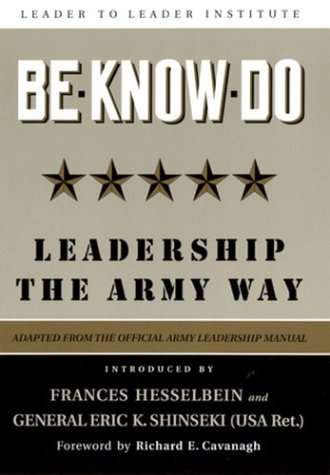
BE-Know-Do explores the leadership philosophy of the US Army
Hesselbein on Leadership is an inside look of the former CEO of Girl Scouts of America. She was also highlighted in Jim Collins’ monograph Good to Great and the Social Sectors.
Principle-Centered Leadership from the author of Seven Habits of Highly Effective People comes this book about the “natural laws of life to organizations".
In The Faith of Barack Obama, Mansfield holds back nothing to share that vision and explain its roots, including:
• Obama’s upbringing in a non-Christian home
• the influence on his life from his agnostic mother and Muslim father
• his remarkable turn to Christianity after working in the inner cities of Chicago
• his years at the controversial Trinity United Church of Christ
• his association to the radical teachings of Rev. Jeremiah Wright
• the source of Obama’s relentless optimism and hope for America
The classic tale of The Three Musketeers is one of my all-time favorites. The book has spawned a lot of movies but only one (made in the 70’s) comes close to resembling Dumas’ narrative. Twenty Years After is the sequel following the four heroes decades after the first story unfolded. Most people are also familiar with The Man in the Iron Mask from the movie featuring Leonardo DeCaprio, which is actually only part of the third installment of the Musketeer Saga. This is not a book for literary wimps since it logs just under 800 pages (this would take my brother about 10 years to read).
Reading this book for my grad class (production and operations management) this summer. Its written in novel form....but has the content of a textbook. If nothing else...you gotta give to a guy who can write a novel about the theory of constraints.
I've been reading the author's blog for a while now and am excited to read his new book about how a church can remain culturally relevant while communicating the unchanging integrity of God's truth. The church we attend now already holds this perspective as a core value so this is like "preaching to the choir" but I am looking forward to being inspired and challenged by Tim with this book.
I'm a big fan of Steinbeck (of mice and men, east of eden) so I am looking forward to reading this novella. He is a master of telling a great story while wrestling with life's great mysteries.